
New Build or Older Building in Sarıyer? A Buyer's Comparison Guide
Read this post in Turkish →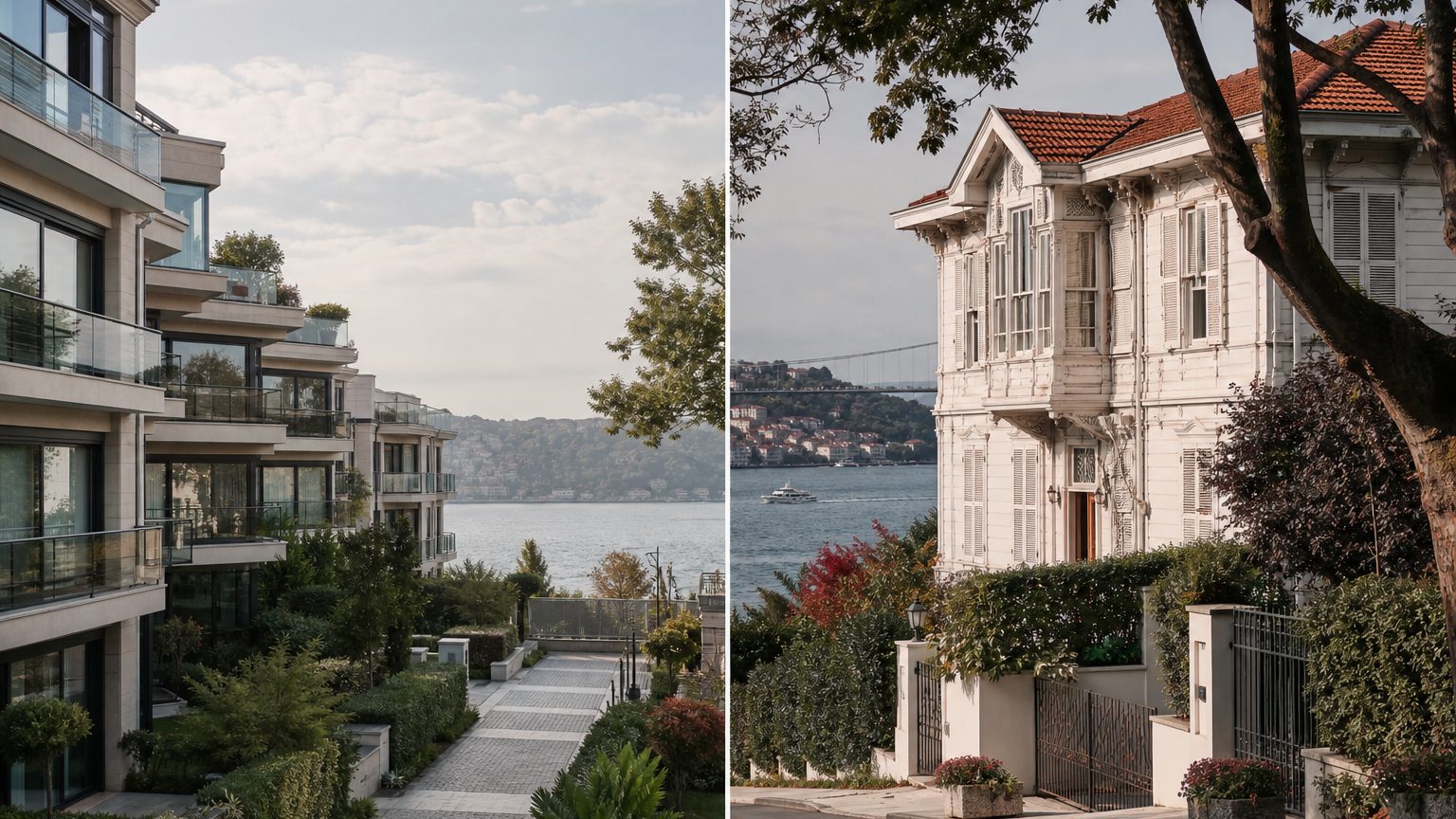
New build or older building?
This is the question almost everyone looking for a home in Sarıyer runs into at some point. With the same budget, you have a brand new or lightly used apartment on one side, and on the other a building in a better location but with a few decades behind it. Both options make sense in their own way. The right decision depends on your priorities and on the concrete condition of the apartment in front of you.
In this article I want to compare the two without exaggeration. The aim is not to hand you a ready made answer, but to help you ask the right questions.
Location and land value
Sarıyer's greatest asset is its location and its closeness to the Bosphorus. Finding a new building along the shoreline in Yeniköy, Tarabya or İstinye is difficult, because these areas were built out years ago. That is why apartments in the very best locations are often inside older buildings.
In an older building, the land share attached to the apartment is usually higher. Over the long term this can be a meaningful advantage, especially in areas where urban transformation is a possibility. New buildings, on the other hand, are mostly concentrated slightly further inland, in places such as Bahçeköy, Zekeriyaköy or close to the Maslak border.
In short: if you want the best view and the most central location, you will probably be looking at an older building. If a modern living space and gated community comfort come first, you will lean towards a new build.
Earthquake safety
In Istanbul this subject now sits at the centre of every purchase decision. The general framework looks like this:
- Buildings from before 2000 may have been built to weaker standards than today's.
- Standards rose with the regulation introduced after 2000.
- The 2018 regulation brought the most up to date seismic criteria.
Still, the year of construction alone is not a sufficient indicator. Two buildings completed in the same year can be in very different condition because of the ground beneath them, the quality of materials and the workmanship. If you are seriously considering an older building, the right move is to commission an independent structural assessment. Has the building been reinforced? Is there a soil survey? What is the status of the construction permit and the iskan, the occupancy permit? Do not move forward before clarifying these.
Cost and monthly dues
The first figure everyone looks at is the asking price, but the real cost does not end there.
In new buildings:
- The sale price is generally higher.
- Monthly dues can be higher because of the services the complex provides.
- You would not expect a major renovation expense in the first years.
In older buildings:
- The sale price can be more reasonable for the same location.
- Dues are lower, but shared costs such as the roof, plumbing or the lift can add up significantly from time to time.
- You may need to set aside a budget for renovating the apartment itself.
These figures change from building to building and from neighbourhood to neighbourhood. For a proper comparison, you need to find out the current dues for both options you are considering, the shared expenses that were recently paid, and any costs that are already planned.
Comfort and daily living
New buildings generally come with more practical layouts, better insulation and facilities such as parking and security. They can also be more energy efficient, which shows up in heating and cooling bills.
Older buildings have a character of their own. Ceilings can be higher, rooms can feel more generous, and you can still find detached houses with gardens. For anyone who loves the older fabric of Sarıyer, these details matter. But you should factor in from the start that windows, plumbing and insulation may need updating.
Looking at it as an investment
The investment logic works differently for each.
An older building bought in a good location with a high land share can carry transformation potential over the long term. This suits a more patient investor profile with a tolerance for risk.
A new build usually means less effort for someone who wants to rent the property out. Finding a tenant can be easier and maintenance costs are more predictable. Rental multiples and yields always depend on the area and on the specific apartment, so they should be assessed with current data.
Questions to ask yourself before deciding
These questions help clarify which option fits you:
- Will I live in this home, or am I buying it as an investment?
- Is location or comfort my priority?
- Can I set aside an extra budget for renovation and upgrades?
- How thorough an inspection am I prepared to commission on earthquake safety?
- Can I cover the dues and hidden costs over the long term?
Your answers to these will largely determine your choice between the two.
Conclusion
There is no single correct answer to the new build versus older building debate. In a district like Sarıyer, which has both a historic fabric and new developments, either can be the right choice. What matters is making the decision based on the real condition of the apartment, the location and your own needs, rather than on the price tag.
If you would like to move forward with an advisor, you can reach Müjgan Şimşek through the site and we can weigh up your options together.
Frequently Asked Questions
It can, when location, structural condition and price are assessed together. Older buildings with a Bosphorus view or a central position can be particularly advantageous in terms of land share and location value. That said, earthquake safety and potential renovation costs must always be factored in.
New buildings usually include shared facilities such as security, parking, a pool, a gym and landscaping. These services are reflected in the dues. Older buildings have few such shared areas, so dues stay lower, but certain maintenance costs can come up separately.
Buildings constructed under the post 2000 regulation are safer, and those built to the 2018 regulation meet even more current standards. But the year alone is not enough; each building's own soil survey and construction supervision history should be examined separately.